
What does ecological landscape and garden design mean in practice?
This journal offers reflections on landscape and garden design, exploring ecological thinking, intuitive process, and the role of gardens as living, evolving spaces. Here we share thoughts on working with place, planting, and long-term stewardship, alongside insights from the studio and ongoing projects.
Ecological landscape and garden design is often spoken about, but less often explained. In practice, it is not a fixed style or a checklist of features, but an approach rooted in observation, care, and a deep respect for place.
At its heart, ecological design begins with listening. Every site carries its own character — shaped by soil, light, climate, existing vegetation, and the way it is already used. Rather than imposing a preconceived aesthetic, an ecological approach allows these conditions to guide the design process, responding intuitively to what is already present.
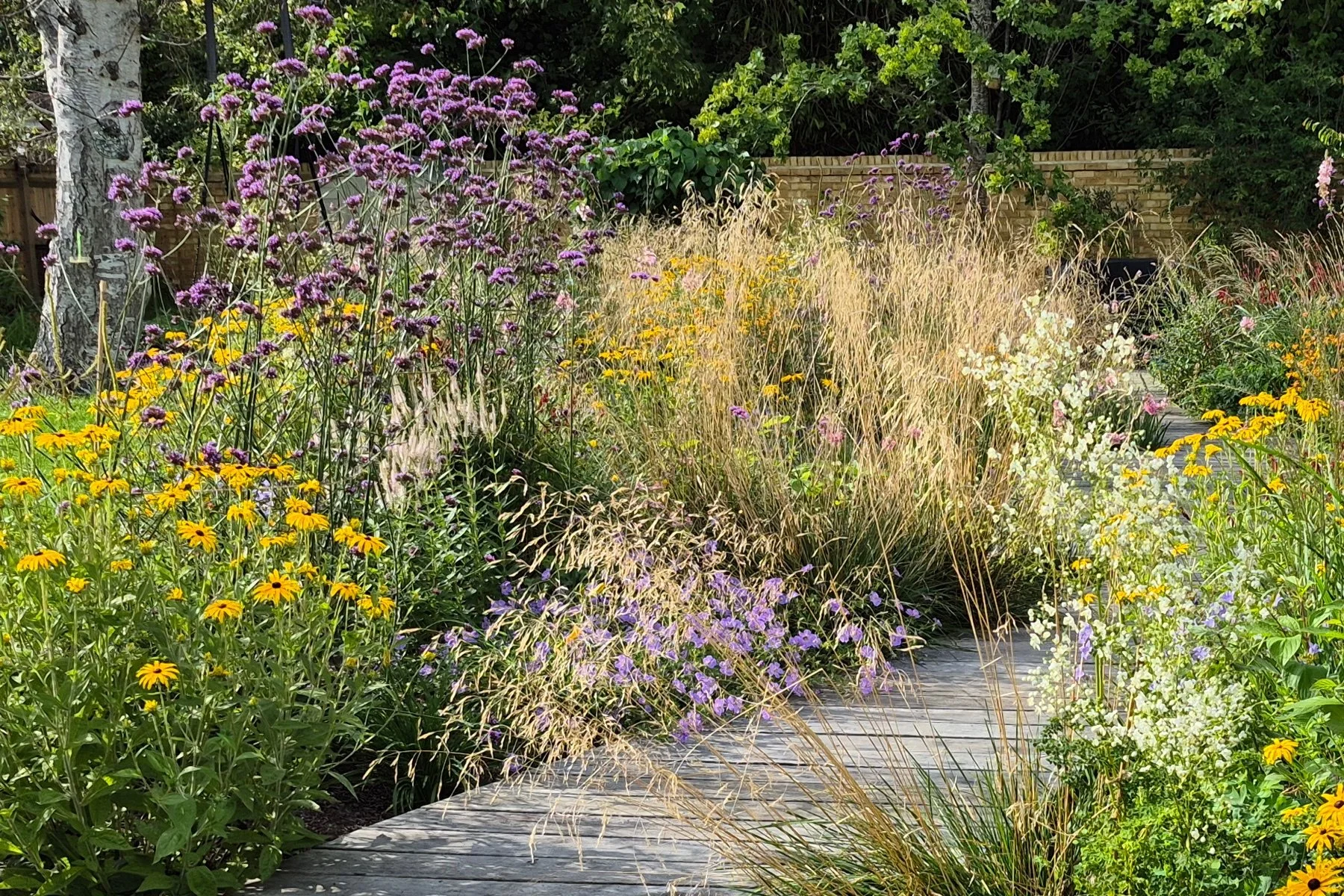
Naturalistic planting plays a central role. Plants are chosen not only for their appearance, but for how they relate to one another, how they support local ecology, and how they will evolve over time. This creates gardens that feel grounded and immersive, changing gently with the seasons rather than demanding constant intervention.
Ecological design also considers longevity. A garden should mature gracefully, becoming richer and more settled with time. This requires careful planning, clear structure, and an understanding of how landscapes grow and shift. Thoughtful stewardship — rather than short-term impact — underpins every decision.
Importantly, ecological landscape design does not mean sacrificing beauty or clarity. On the contrary, it often results in spaces that feel calm, generous, and deeply restorative. When a garden is designed in harmony with its environment, it can support both human life and wider ecology without feeling overworked or contrived.
We have a number of projects we are working on that are long term, and focused on supporting and developing the planting and habitat creation and establishment, and their gentle management. The long term involvement is critical for us as designers to ensure the longevity and sustainability of our schemes.
In practice, this approach is collaborative and intuitive. It involves working closely with clients, architects, and specialist teams, balancing practical needs with atmosphere and feeling. The aim is to create outdoor spaces that are not only functional, but meaningful — places that sit comfortably within their setting and continue to give back over time.
FAQ’s
What is ecological landscape and garden design?
Ecological landscape design is an approach that works with natural conditions rather than imposing a fixed style. It focuses on supporting local ecosystems, choosing appropriate plants, and designing gardens that evolve naturally over time.
How is ecological garden design different from traditional garden design?
Ecological design prioritises the health of the landscape and local biodiversity. Instead of focusing only on appearance, it considers soil, climate, habitat creation, and how planting will develop long term.
Why is naturalistic planting important in ecological gardens?
Naturalistic planting mimics the way plants grow together in nature. By selecting plants that suit the site and support local wildlife, gardens become more resilient, immersive, and easier to maintain.
Do ecological gardens require less maintenance?
Ecological gardens are designed for long-term sustainability, but they still require thoughtful care. Management tends to focus on guiding natural growth and supporting habitats rather than constant redesign or heavy intervention.
Can ecological garden design still be beautiful?
Yes. Ecological gardens often feel calm, immersive, and richly layered. When planting and design respond naturally to the environment, the result can be both visually striking and ecologically supportive.